
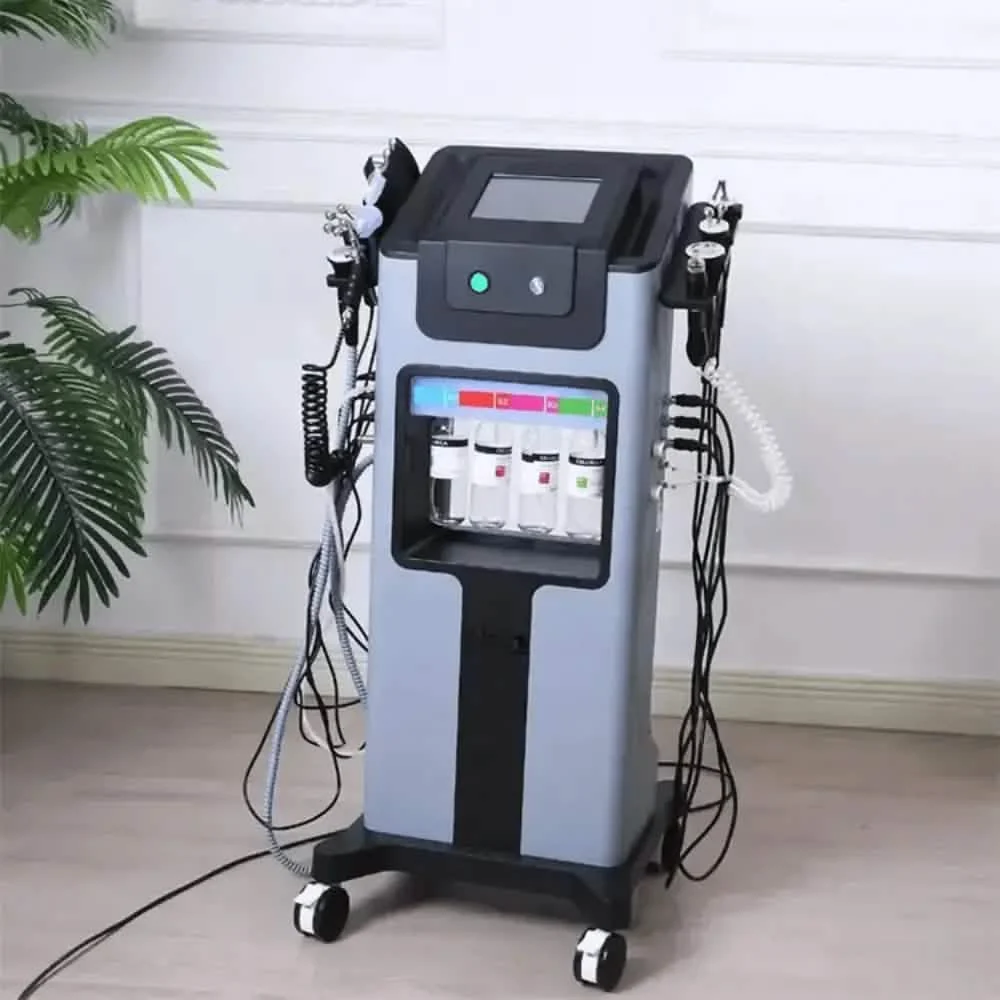
Choosing a Professional Hydradermabrasion Machine: A UK Salon Buyer’s Guide
Hydradermabrasion has become one of the most requested facial treatments in UK salons and clinics, and the equipment market has expanded to match. That expansion has brought a wide spread of quality, a confusing amount of terminology, and a good deal of machinery sold online that a UK insurer will not cover.
This guide covers what the treatment actually is, the compliance and insurance requirements that apply in the UK, what to check before buying, and how to work out whether the numbers stack up for your business.
First, the Terminology — Because It Matters Commercially
The generic name for this technology is hydradermabrasion, sometimes written as hydrodermabrasion or hydro-dermabrasion. It describes a category of device: vortex suction combined with water-based serum infusion.
HydraFacial is a registered trademark and a specific branded system produced by one manufacturer. It is not a generic term for the treatment, even though it is very widely used as one — in the same way that people say “Hoover” when they mean a vacuum cleaner.
That distinction has a practical consequence for anyone running a salon. If you buy an independent hydradermabrasion machine, you have not bought a HydraFacial system, and marketing your treatments using that trademarked name carries a genuine risk of a complaint from the trademark owner. The safe approach is to describe your service by the technology or by your own treatment name — a hydradermabrasion facial, an aqua facial, a hydro facial — rather than by a brand you do not have a licence to use.
This is worth understanding before you spend money on signage, menus and marketing, because renaming a treatment after launch is considerably more awkward than naming it correctly at the start.
What the Treatment Does
A hydradermabrasion handpiece creates a vortex of water or serum at the skin’s surface while applying gentle suction. In a single pass it loosens debris, exfoliates, extracts from the pores and infuses serum, which is why it is often described as a wet alternative to crystal or diamond-tip microdermabrasion.
The practical differences that matter on a treatment menu:
- Comfort. It is generally gentler than abrasive microdermabrasion, which widens the range of clients you can treat.
- No downtime, so clients can return to normal activity immediately.
- Immediate visible result, which supports rebooking and course sales.
- Suitable for most skin types, subject to proper consultation and contraindication screening.
- Combines well with other modalities, which is why most machines are sold as multifunction systems.
It is a cosmetic treatment, not a medical one. Claims about treating skin conditions, rather than improving appearance, move you into territory that advertising rules and your insurer will both take an interest in.
How Many Functions Do You Actually Need?
Machines are sold by function count — 2-in-1, 6-in-1, 7-in-1, 9-in-1 and beyond. More functions is not automatically better value, because each one you never use contributes to price, service complexity and points of failure.
| Configuration | Typically suits | Consider |
|---|---|---|
| 2-in-1, focused system | Mobile therapists and single-room salons offering hydradermabrasion as a core service | Lower cost and footprint; limited menu expansion |
| 6-in-1 | Salons building a broader facial menu from one investment | The common sweet spot for versatility against cost |
| 7-in-1 with LED | Salons wanting light therapy included rather than as a separate device | Check whether the LED is a genuine treatment mask or a token addition |
| 9-in-1 and above | Multi-room clinics with several practitioners and a wide menu | Only worthwhile if the functions map to treatments you will actually sell |
| Trolley-mounted units | Fixed treatment rooms | Measure your room and door widths before ordering |
The useful exercise before buying: write down the treatments you intend to put on your menu and price, then check that each machine function corresponds to one of them. Functions that do not appear on that list are paying for themselves out of your pocket.
UK Compliance: The Part That Determines Insurability
This is where cheap imports cause real problems, and it is the single most important section of this guide.
- UKCA or CE marking. Professional equipment placed on the UK market must meet the applicable conformity requirements. Ask which marking the specific model carries.
- Declaration of Conformity. Ask for it in writing, for the exact model you are buying. A marking on the casing without accompanying documentation is not evidence of much.
- RoHS compliance, concerning restricted substances in electrical equipment.
- Electrical safety. UK plug and voltage, and appropriate testing. Equipment supplied with a travel adaptor is a warning sign.
- WEEE obligations, which apply to suppliers of electrical equipment.
- Instructions in English, covering setup, operation, cleaning and maintenance.
- Intended purpose. Most of these machines are supplied for cosmetic use by trained professionals, not for medical use. Using equipment outside its stated intended purpose will generally invalidate both warranty and insurance.
Buying from a UK-registered company matters here beyond patriotism. If something fails, you want a company with a UK registration number, a UK address and a VAT number — not an overseas marketplace seller. Check the company at Companies House before you spend four figures; it takes two minutes.
Training and Insurance Are Linked
You will generally need accredited training to obtain professional indemnity and treatment liability cover for hydradermabrasion, and insurers commonly require a certificate from a recognised accrediting body.
Practical steps before you commit to a machine:
- Contact your insurer or broker first and ask what training they require for this specific treatment. Do this before buying, not after.
- Check which accreditation the training carries. Recognised bodies in the UK beauty sector include ABT, IPHM and IGCT among others; confirm your insurer accepts the one on offer.
- Distinguish machine training from treatment training. A supplier’s course on operating their equipment is useful and is not the same as accredited treatment training.
- Confirm what is included with the machine and what costs extra.
- Keep the certificates, along with your consultation and contraindication forms and treatment records.
Comparing Suppliers Rather Than Just Machines
Very similar-looking units are sold by a wide range of suppliers at a wide range of prices, and the difference is usually what happens after the delivery. Before ordering, establish the following in writing.
| Question | Why it matters |
|---|---|
| Warranty on the main unit, and on accessories | These are frequently different periods; handpieces and tips are consumable items |
| Availability of replacement parts and tips | A machine you cannot get tips for is scrap |
| Who provides support, and from where | UK-based support versus an overseas email address is a material difference |
| Return and refund terms | Distance selling rules apply to consumer purchases; business-to-business sales are governed by the supplier’s own terms, so read them |
| Delivery, and whether it is insured | Large units are vulnerable in transit |
| Declaration of Conformity for the exact model | Your insurance position may depend on it |
| What training is included | And whether it satisfies your insurer |
Among UK suppliers in this category, the range at best hydrafacial machine uk sets out its machines by function count with certification, warranty terms and included training stated for each model, which is the level of detail worth insisting on wherever you buy. Glow Beauty Case LTD is a UK-registered company trading on a business-to-business basis, with UKCA or CE and RoHS certification stated per model, accredited training available, and finance options through Shop Pay and Klarna.
Whoever you choose, compare on documentation and aftercare rather than on headline price. The cheapest unit is rarely cheapest once you account for a handpiece you cannot replace.
Running Costs, Which Are Modest but Real
Consumables for hydradermabrasion are low relative to the treatment price, which is part of the appeal. Budget for:
- Serums and solutions, which are the main per-treatment cost
- Disposable or replaceable tips, depending on the system
- Filters, which need changing at intervals
- Distilled or deionised water, where the manufacturer specifies it
- Cleaning and disinfection products, plus consumables such as couch roll and gloves
- Periodic replacement of handpieces and tubing
Ask the supplier for the expected consumable cost per treatment for the specific model and serum range, and whether you are tied to their consumables or can source generically. Being locked into a single supplier’s serums materially changes the long-term cost.
Doing the Numbers Honestly
Equipment suppliers publish return-on-investment figures, and they are illustrations rather than forecasts. Build your own using your actual prices and your actual diary.
A worked example, with figures that are illustrative only and not a projection of what any business will achieve:
| Line | Illustrative figure |
|---|---|
| Treatment price | Set by your local market; UK salon pricing for this treatment commonly sits in a range rather than at one figure |
| Consumables per treatment | Low single-figure pounds on most systems — confirm with your supplier |
| Practitioner time per treatment | Cost it, including turnaround and consultation, even if that practitioner is you |
| Contribution per treatment | Price, less consumables, less the fully loaded cost of the time |
| Treatments to cover the machine | Machine cost divided by contribution per treatment |
| Realistic weekly bookings | Be conservative. New treatments take time to fill |
Two things that break these calculations in practice. The first is costing your own time at zero, which flatters every figure. The second is assuming a full diary from launch; most salons take a few months to build a new treatment, and the machine payment does not wait.
If you are financing the purchase, run the numbers at a booking level you are confident of rather than one you hope for, and check the total cost of the finance rather than the monthly figure.
Before You Order: A Short Checklist
- Confirm with your insurer what training they require for this treatment
- Ask for the Declaration of Conformity for the exact model
- Confirm UKCA or CE and RoHS status in writing
- Check warranty periods separately for the unit and the accessories
- Confirm replacement tips, handpieces and filters are available
- Check the supplier at Companies House
- Read the return and refund terms, noting these differ for business purchases
- Measure your treatment room, doorways and power sockets
- Ask the consumable cost per treatment, and whether you are tied to their serums
- Build your own return calculation with your own prices and conservative bookings
Frequently Asked Questions
Can I advertise my treatment as a HydraFacial?
Not unless you have bought that branded system and are licensed to use the name. HydraFacial is a registered trademark. Describe your service by the technology — a hydradermabrasion or hydro facial — or give it your own treatment name.
Do I need accredited training, or is supplier training enough?
Supplier machine training covers operating the equipment. Insurers generally require accredited treatment training from a recognised body. Ask your insurer what they accept before you buy.
Is a higher function count better value?
Only if you will sell treatments using those functions. Map each function to a service on your menu; anything left over is cost without return.
Are cheaper machines from online marketplaces a false economy?
Frequently. The issues are documentation, parts availability and support rather than the unit itself. Without a Declaration of Conformity for the model, your insurance position may be compromised.
How long before the machine pays for itself?
That depends entirely on your pricing, your costs and how quickly you fill the diary. Treat supplier ROI figures as illustrations, cost your own time properly, and model conservative booking numbers.
The Bottom Line
Get the terminology right before you print anything: you are buying a hydradermabrasion machine, and HydraFacial is somebody else’s trademark.
Then speak to your insurer before your supplier, insist on a Declaration of Conformity for the exact model, and check warranty, parts availability and support separately from the headline price. Match the function count to treatments you will actually sell rather than to the largest number available.
And build your own return calculation with your own prices, your own time costed properly, and a conservative view of how quickly the diary fills. The equipment decision is usually easier than the business decision underneath it.
This article is general information for UK beauty professionals and is not legal, regulatory, insurance, financial or medical advice. Professional aesthetic equipment is supplied for cosmetic use by trained and competent practitioners, is not intended for medical use, and must be operated in accordance with the manufacturer’s instructions and within its stated intended purpose. Conformity marking, insurance, training and advertising requirements change and differ by circumstance; verify the current position with the relevant regulator, your insurer, your accrediting body and the supplier for the specific model concerned. Pricing, specifications, warranty terms and availability referred to here change frequently and should be confirmed directly with the supplier. Return-on-investment figures are illustrative only and no financial outcome is guaranteed. HydraFacial is a registered trademark of its respective owner and is referred to here for descriptive and comparative purposes only; no affiliation or endorsement is implied.